

The following primer describes the main approaches to innovation as well as the new approach we are developing together in the Lab. While the traditional approaches work well in some situations, they are limited in their ability to address complex problems in dynamic environments.

Stage-Gate
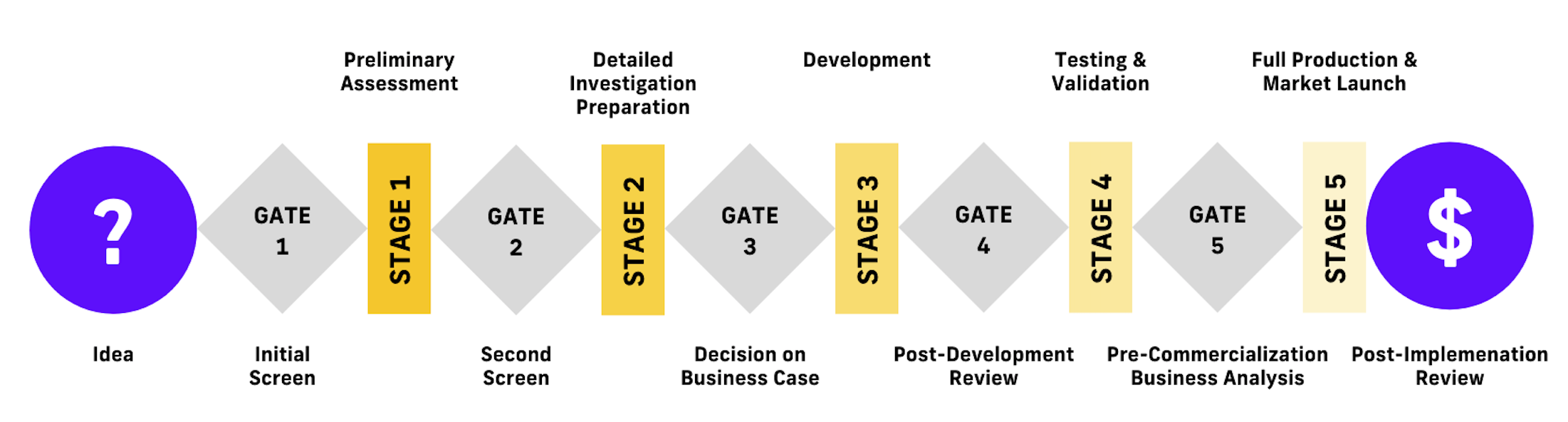
The stage-gate process follows a pre-set sequence of stages, such as a preliminary assessment and developing the product. Each stage is followed by a gate that represents a decision point. Senior managers make a “go/no-go” decision about whether to continue to invest in the project or end it. With each stage, costs and organizational commitment increase and uncertainty decrease.
Design Thinking
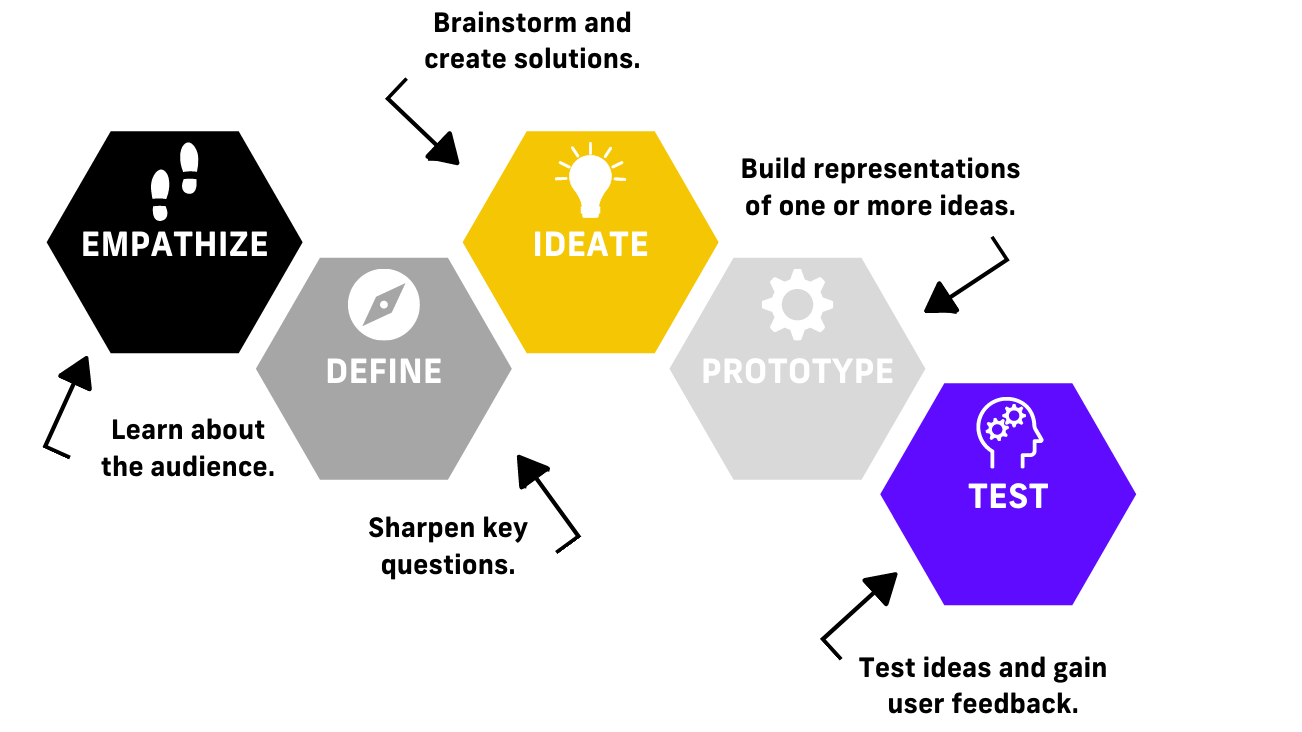
Design thinking applies to the entire innovation process; the design principles that are typically used to make new products useful and attractive. The goal is to create products or processes that better meet users’ needs and desires. Designers begin by looking at the problem from the user’s perspective. This human-centred discovery process is followed by iterative cycles of prototyping, testing, and refinement.
Open Innovation
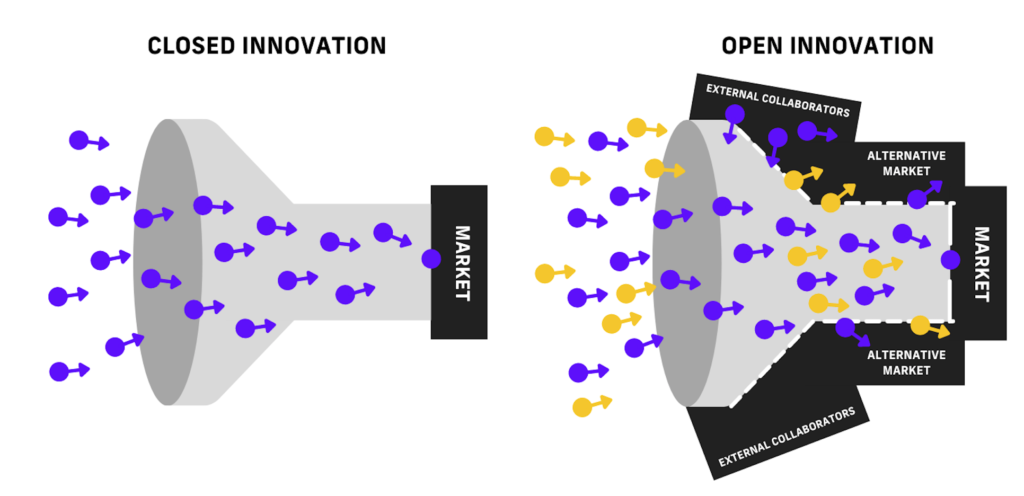
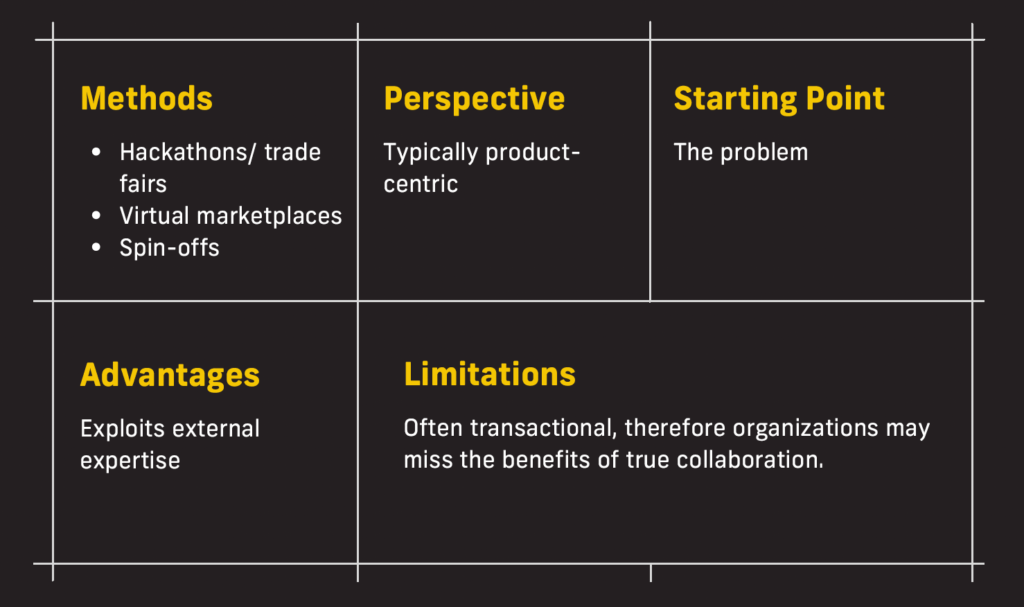
Open innovation sources ideas from outside the organization, often in a transactional (rather than collaborative) way. This model is decentralized and participatory. Unlike closed approaches, which rely only on the organization’s knowledge, open innovation employs a purposeful flow of learning in and out of the organization to accelerate innovation and expand markets.
Lean Startup
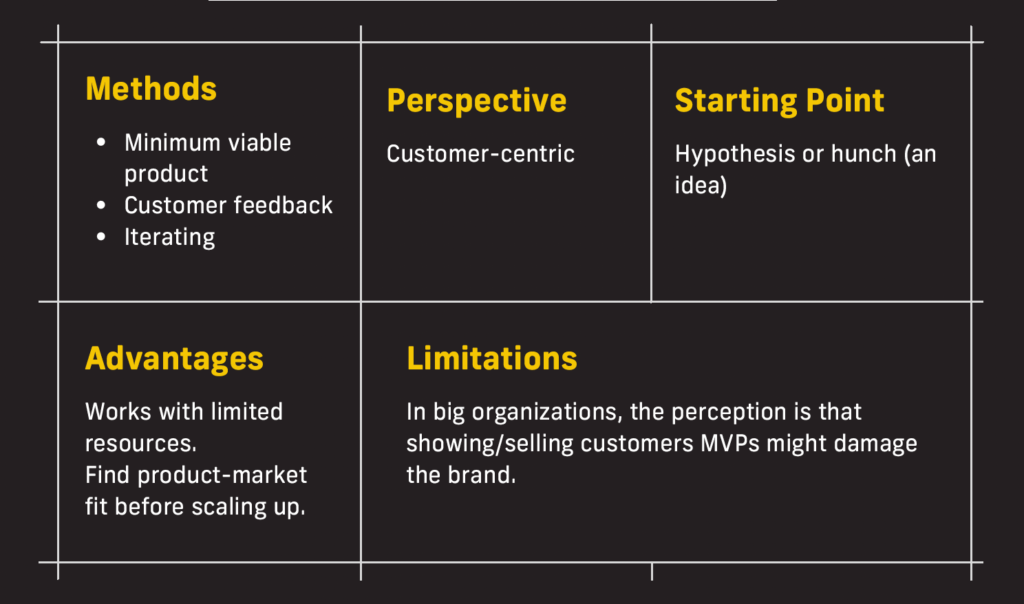
The key tenets are ‘failing fast’ and ‘continuous learning’. This approach starts with the development of a minimum viable product (MVP), which is used to test ideas and to gather customer feedback. Once the MVP is launched, data from customers are collected, which feeds into the iterative process of product improvement. Although this approach is mainly used by start-ups, it is increasingly applied by larger organizations.

Systemic Design
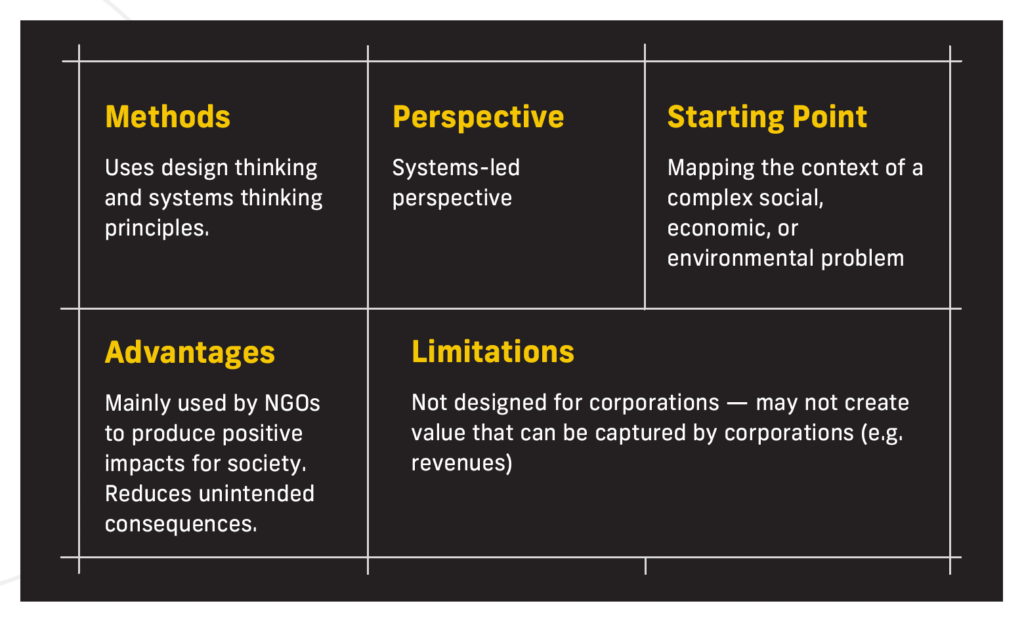
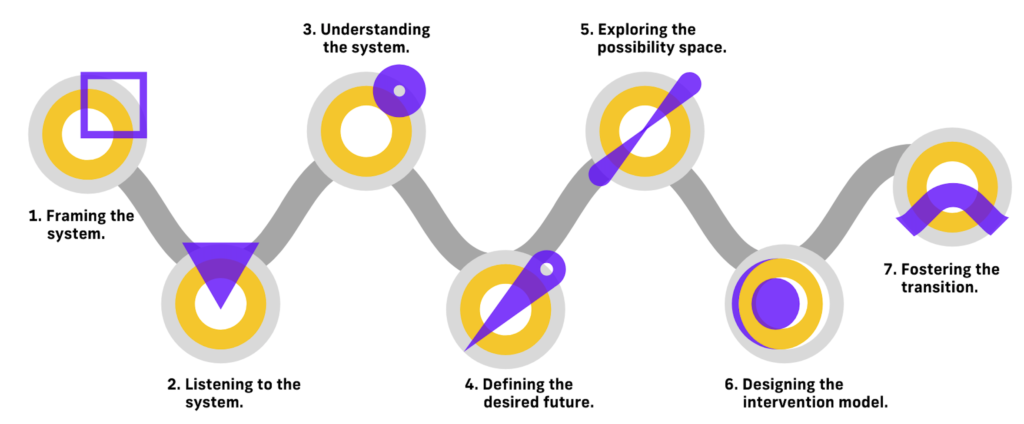
This approach is often used by NGOs to tackle ‘wicked’ societal, economic, and environmental problems. It draws systems thinking into design thinking so that the complexity of the system can be incorporated into the design.
The Lab at Innovation North
ADD INNOVATION NORTH COMPASS HERE
This is the new approach to innovation that we are developing in the Lab at Innovation North. Our aim is to motivate innovations that create value for society and are captured by the organization.
Methods
The Innovation North Compass
- Zooming in and out
- Looking left and right
- Measuring and assessing
- Embracing tensions
Perspective
- Centred on people across levels (individual, organizational, societal)
Starting Point
Four possible starting points:
- Problem
- Awareness
- Solution
- Action
Advantages
- Can generate radical innovations and long-term value for the organization.
Limitations
- A tool that is in development
- Requires comfort with ambiguity