
About Innovation North
Our Founder

Dr. Tima Bansal has been thinking about business sustainability for the past 30 years. A globally recognized, award-winning researcher, her work has targeted the interplay between business strategy and sustainability, connecting theory with action.
Tima has always been a strong advocate of the concept of sustainable development — that the needs of the present should not compromise the needs of future generations. Considered a pioneer in this field, she has led initiatives that shape the business school curriculum, as well as the management discipline.
Led by this philosophy, at Innovation North, we believe that business success does not have to compromise society’s well-being. They are interdependent.
Our Beginning
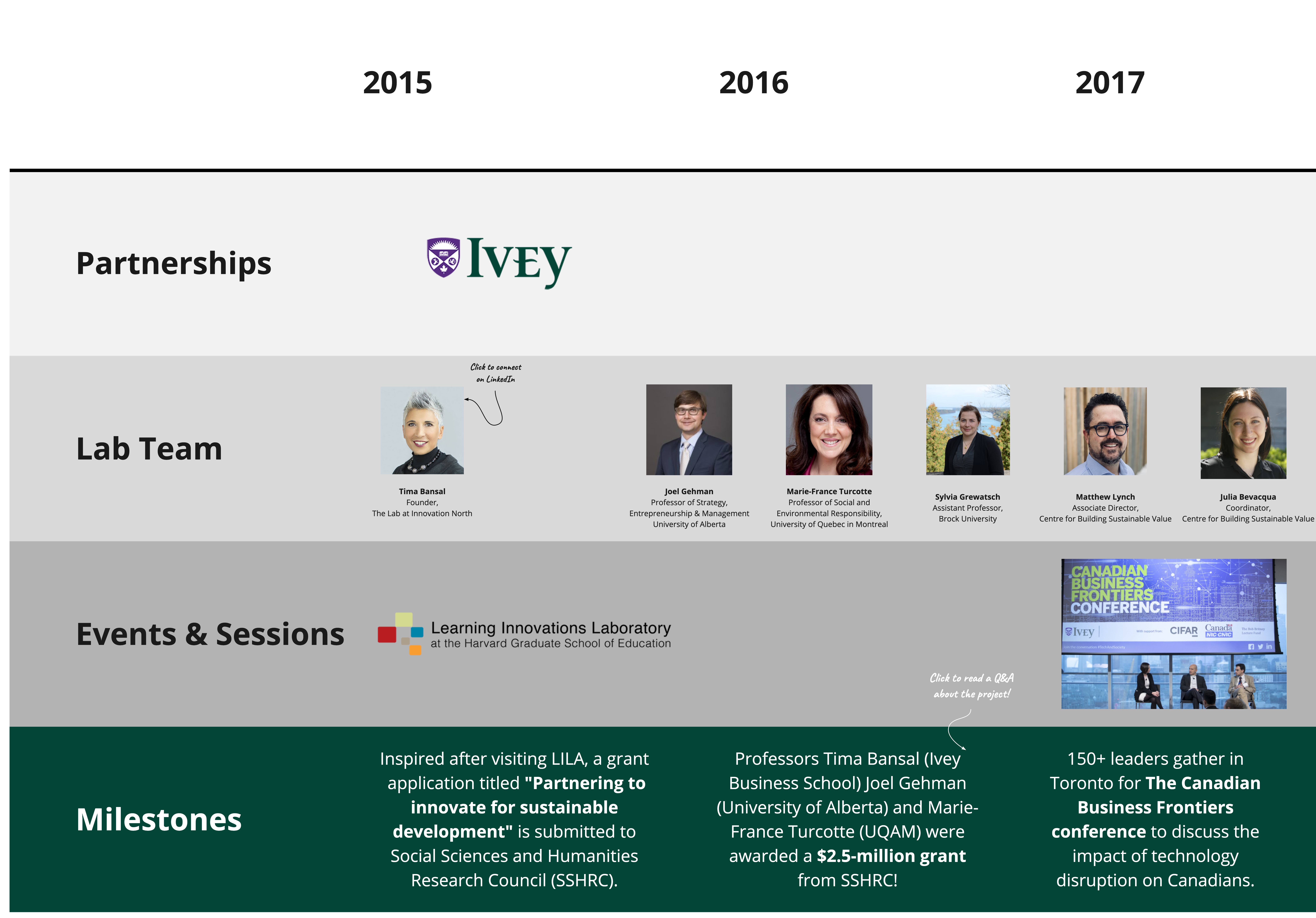
In 2003, Tima founded the Network for Business Sustainability, which links researchers and managers to challenge current ideas of sustainability, and in 2005, she founded the Ivey Centre for Building Sustainable Value. She was the Executive Director for both of these initiatives until 2020 and 2021 respectively.
As part of the Centre, Tima invited senior leaders, academics, and world-renowned systems innovators to tackle the unapologetically aspirational goal to ‘innovate the innovation process’, where participants co-create new insights on how to integrate systems innovation and business strategy. This quarterly gathering, which launched in 2019, started as the Innovation Learning Lab.
<< click the image to see the evolution of the Lab and our community of co-creators in more detail
Our Future Direction
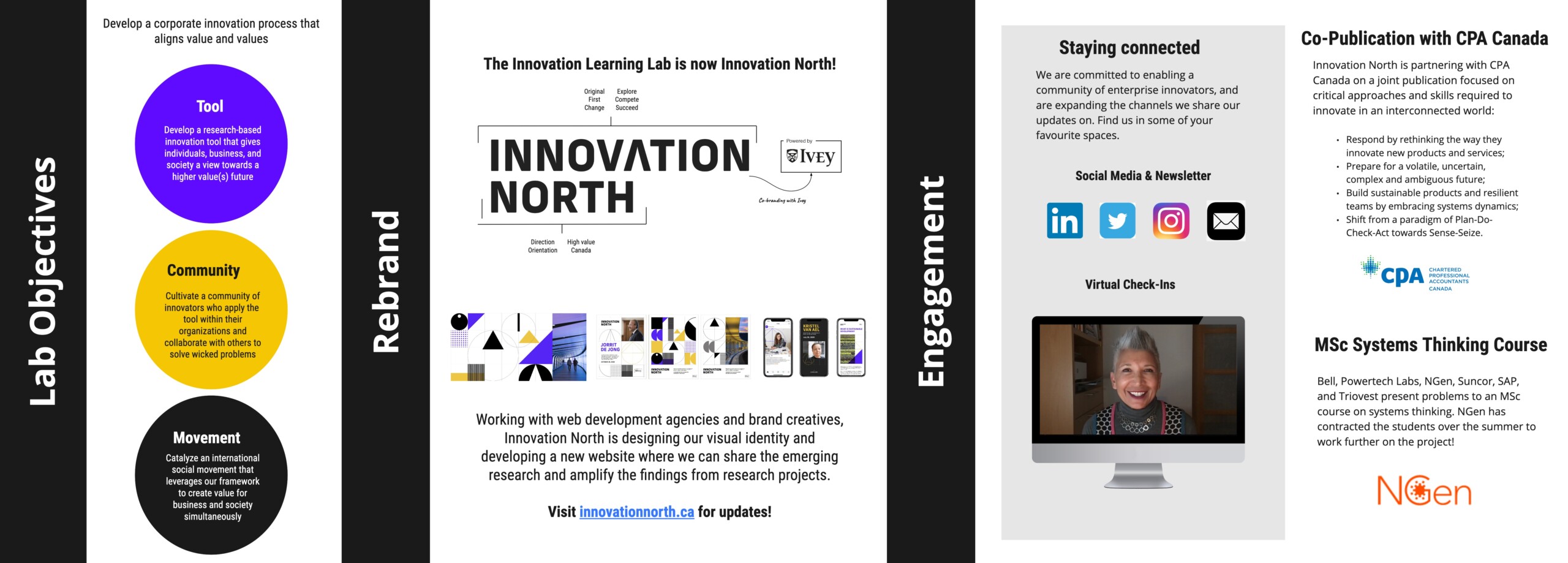
Recognizing the impact of bringing a systems lens to innovation processes across all sectors, the Lab ignited Innovation North, a home for co-learning the approaches and the tools to help organizations integrate a systems lens into their innovation practices, building towards higher value(s).
As Innovation North evolves, we are still planning our quarterly gatherings, and those lab sessions will wind down in 2024.
< < click the image to see more details
Land Acknowledgement
Traditional Lands
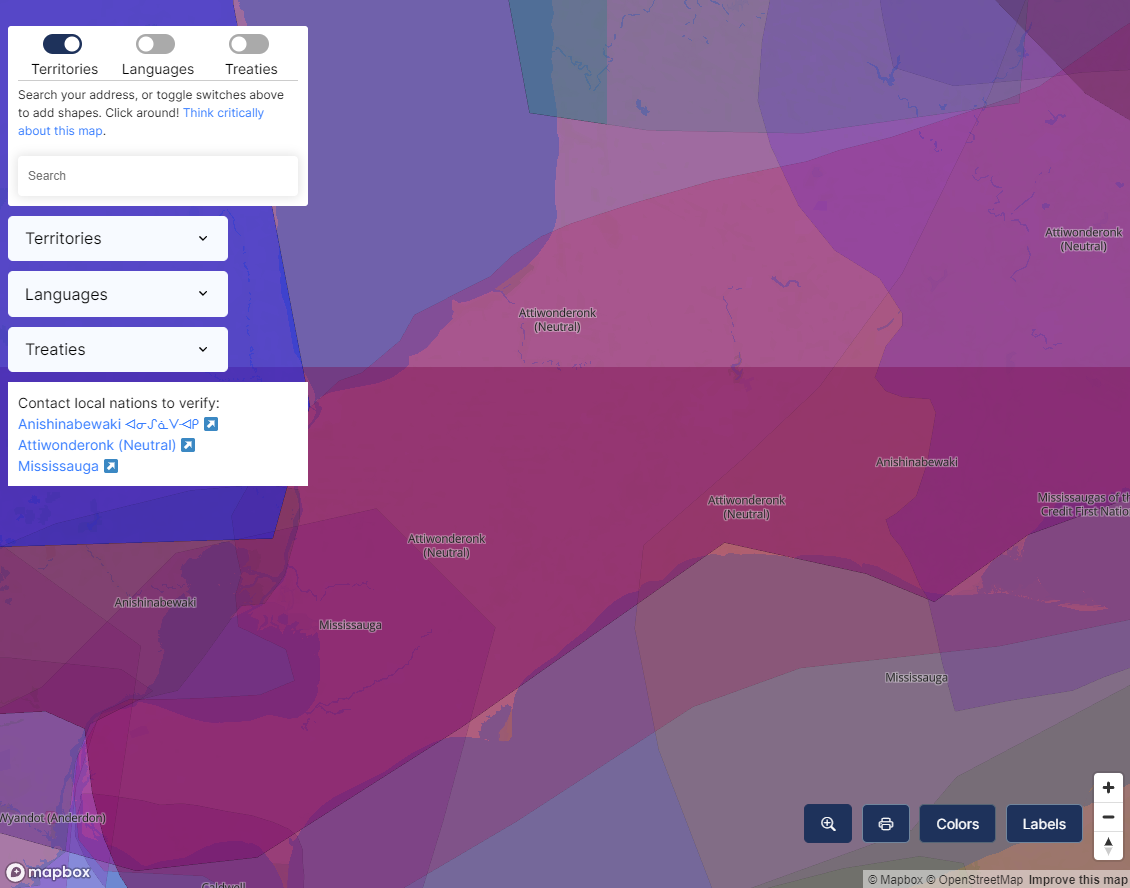
We acknowledge that Ivey Business School and The University of Western Ontario are located on the traditional lands of the Anishinaabek (Ah-nish-in-a-bek), Haudenosaunee (Ho-den-no-show-nee), Lūnaapéewak (Len-ahpay-wuk) and Attawandaron (Add-a-won-da-run) peoples, on lands connected with the London Township and Sombra Treaties of 1796 and the Dish with One Spoon Covenant Wampum. This land continues to be home to diverse Indigenous peoples (e.g., First Nations, Métis, and Inuit) whom we recognize as contemporary stewards of the land and vital contributors of our society.
We acknowledge that Ivey Business School and The University of Western Ontario are located on the traditional lands of the Anishinaabek (Ah-nish-in-a-bek), Haudenosaunee (Ho-den-no-show-nee), Lūnaapéewak (Len-ahpay-wuk) and Attawandaron (Add-a-won-da-run) peoples, on lands connected with the London Township and Sombra Treaties of 1796 and the Dish with One Spoon Covenant Wampum. This land continues to be home to diverse Indigenous peoples (e.g., First Nations, Métis, and Inuit) whom we recognize as contemporary stewards of the land and vital contributors of our society.
You can learn more about the stewardship and treaties connected to where you’re situated by visiting native-land.ca.
Truth and Reconciliation
We encourage our community of co-creators to read the Truth and Reconciliation Commission of Canada’s report and incorporate the principles of the 92nd Call To Action: Business and Reconciliation, which reads as follows:
“We call upon the corporate sector in Canada to adopt the United Nations Declaration on the Rights of Indigenous Peoples as a reconciliation framework and to apply its principles, norms, and standards to corporate policy and core operational activities involving Indigenous peoples and their lands and resources. This would include, but not be limited to, the following:
- Commit to meaningful consultation, building respectful relationships, and obtaining the free, prior, and informed consent of Indigenous peoples before proceeding with economic development projects.
- Ensure that Aboriginal peoples have equitable access to jobs, training, and education opportunities in the corporate sector, and that Aboriginal communities gain long-term sustainable benefits from economic development projects.
- Provide education for management and staff on the history of Aboriginal peoples, including the history and legacy of residential schools, the United Nations Declaration on the Rights of Indigenous Peoples, Treaties and Aboriginal rights, Indigenous law, and Aboriginal-Crown relations. This will require skills-based training in intercultural competency, conflict resolution, human rights, and anti-racism.”
How We’re Addressing the 92nd Call-To-Action
We recognize that interdependence and relationships are innate to both an Indigenous worldview and to systems innovation, and can reshape how businesses see themselves and show up in the world .
In western philosophy, business often treats people, things and activities as discrete and separated. That is, businesses are separated from each other and society, and transactions are governed by markets and contracts.
An Indigenous worldview is relational—from people to things, and even ideas. It is a worldview that recognizes that relationships take time to form and generate mutual responsibilities.
We believe that business is a part of the natural environment and the community; it does not sit outside of them. Tima Bansal, Innovation North’s founder, has written for Forbes.com about “What Business Leaders can Learn from an Indigenous Worldview.”
You can watch some of the discussion highlights from our lab session with Melanie Goodchild for more insights into this point of view: What Business Leaders Can Learn From An Indigenous Worldview